
 Tiếng Việt
News
Rice News Today
Vietnam and Thailand cooperate to boost rice prices in global market
-
The Thai government has announced that Thailand and Vietnam have reached an agreement to increase the price of domestically produced rice in the global market in the context of rising costs in rice production.
Thai Minister of Agriculture and Cooperatives Chalermchai Sri-on said that while rice farmers are affected by rising production costs due to recent complicated developments, such as the COVID-19 pandemic and the conflict between Russia and Ukraine, the price of rice on the global market has increased disproportionately.
In such context, the world’s second and third largest rice exporters, Vietnam and Thailand, will join hands to negotiate a reasonable rise in rice prices through pricing mechanisms on the global market.
To implement the agreement, Thailand and Vietnam will work to create a government negotiation mechanism while trying to convince more rice exporting countries to join the initiative.
Alongkorn Ponlaboot, Thailand’s chief rice price negotiator, said that promoting fairer prices is the mission and responsibility of all rice exporting countries. As climate change is affecting rice cultivation and rice production worldwide, all parties need to work together to ensure food security.
Farmers will have to deal with unfair rice prices in the global market without help and cooperation between the parties.
President of the Thai Rice Mills Affiliation Rangsan Sabaimuang also advocates fairer prices for all parties. Therefore, the cooperation between Thailand and Vietnam has become the first step to implement the above efforts.
The President of the Thai Farmers’ Association Pramot Charoensin welcomed cooperation between Vietnam and Thailand on rice prices, but warned that India still has the largest voice in the pricing of rice in the global market as it is the largest rice exporter in the world.
Therefore, if only Thailand and Vietnam sell rice at a higher price, rice importing countries may turn to India to seek supply.
Shipment from Vietnam aboveboard – rice importer
-
ONE of the importers/consignees of the rice shipment that reached Iloilo claimed to have all the supporting importation documents to prove that duties and taxes were paid.
Famint Corp. strongly objected to its inclusion in the list of importer/consignees that were implicated in the alleged anomalous importation of 38,400 metric tons of Vietnam rice worth more than P1 billion.
“Famint has valid sanitary and phytosanitary import clearances from the Bureau of Plant Industry, the Department of Agriculture for all its rice importations, and has duly declared all these importations with the Bureau of Customs, and paid all the applicable customs, tariffs and taxes,” it said in a statement.
“At all times, Farmint ensures and upholds compliance to all laws and regulations of the Philippines, particularly relevant government agencies, in relation to its rice importation,” it added.
The Port of Iloilo earlier acknowledged the unloading of rice but claimed that the shipments were properly documented.
It said that the rice shipments on board MV Hai Ha 58, MV Hoa Binh 54 and MV Hai Dang 168 were covered with clearances and permits issued by the Department of Agriculture-Bureau of Plant Industry and that P83,322,586.68 in customs duties and taxes were paid.
MV Royal 18, which was also carrying rice, is at the anchorage area and waiting for berthing space.
RPT-ASIA RICE-SUPPLY CONCERNS LIFT INDIAN RATES;
-
RPT-ASIA RICE-SUPPLY CONCERNS LIFT INDIAN RATES; VIETNAM LOSES OUT TO COMPETITION
* Thailand prices slip to $416-$420/t
* China, Philippines have cut rice purchases from Vietnam – trader
By Bharat Gautam
Aug 19 (Reuters) – Indian rates for rice exports rose this week as lower planting fuelled concerns over supplies from the new season, while Vietnamese prices and quality of the grain lagged peers.
Top exporter India’s 5% broken parboiled variety <RI-INBKN5-P1> was quoted at $365-$371 per tonne, up from last week’s $360-$366.
“Weather is not supporting crop in eastern and northern India. Traders have started quoting higher prices for paddy assuming lower production from the new crop,” said an exporter based at Kakinada in the southern state of Andhra Pradesh.
Neighbouring Bangladesh will begin selling rice at a cheaper rate for 5 million poor families and expand such sales from September, in a bid to rein in soaring domestic prices, which saw yet another uptick after the government hiked domestic oil prices.
“I hope domestic rice markets will be stable after the beginning of the sales,” Bangladesh Food Minister Sadhan Chandra Majumder said, adding that the country has adequate stock.
Meanwhile, Vietnam’s 5% broken rice <RI-VNBKN5-P1> were unchanged from the previous week at $390-$393 per tonne on Thursday.
Vietnamese prices are lower than Thailand’s due to weak demand and strong supplies from the summer-autumn harvest, a Ho Chi Minh City-based trader said.
The country’s two key export markets, China and the Philippines, have reduced purchases, with buyers from the Philippines more interested in low-priced rice, the trader said.
Prices have also fallen behind because the quality of rice from the summer-autumn harvest was not better than the grain from competitors, traders said.
Thailand’s 5% broken rice prices <RI-THBKN5-P1> dipped to $416-$420 per tonne from $420-428 last week. Despite declining shipping costs, there haven’t been large orders, a trader said.
Internal trade has kept domestic prices supported, another trader said, adding that there has been trading activity between the Middle East and Europe through Thailand, with continuous supply due to good rain and favourable weather. (Reporting by Rajendra Jadhav in Mumbai, Khanh Vu in Hanoi, Chayut Setboonsarng in Bangkok and Ruma Paul in Dhaka; editing by Uttaresh.V)
The influx of demand from feed buyers in the wake of the Russian invasion of Ukraine has raised numerous questions over the direction of the Asian low-quality white rice market.
-
While commercial feed demand in recent years has been dominated by corn and wheat, Russia’s invasion of Ukraine on Feb. 24 led to price spikes for both products. It has also led to increasing concern about global exportable supplies, with the Black Sea region one of the major origins for these products. However, demand from feed buyers is not new. According to Shirley Mustafa of the UN’s Food and Agricultural Organization, this has been emerging for some time. “Use of rice for feed has been rising since 2020-21, after reaching a seven-year low the year prior,” Mustafa told S&P Global Commodity Insights. “Rice use for animal feed [aside from bran] is usually limited and confined to backyard operations since the commercial feed sector usually has more economically viable alternatives than rice. However, gains in wheat and maize prices over the past year-and-a-half or so, driven by these commodities’ own domestic and international market dynamics, have tended to narrow price differentials with rice [especially broken rice].” In China, for example, these shifting dynamics were directly linked to 2021 rice imports rising by 69% year on year to 4.96 million mt, according to data from Chinese customs, with the world’s largest exporter — India — emerging to satisfy this huge volume of broken rice demand.
Rice markets react
But the demand from feed buyers has spiked in both India and other Asian rice markets since the Ukraine conflict began. In India, for example, sources have reported instances of defaulting and low supplies, with one Kakinada-based exporter going so far as to describe the local broken rice market as a “disaster” due to the sudden influx of demand. In rice export origins which are also destination markets for corn and/or wheat, such as Vietnam, many exporters have withdrawn their broken rice offers due to high domestic demand. Vietnamese 100% broken white rice price has increased by $65/mt since the invasion of Ukraine, reaching a high of $370/mt FOB on March 25, according to Platts assessment from S&P Global. However, many sources view broken rice prices from Vietnam as hypothetical, with the country even importing substantial volumes from India to meet demand. In traditional broken rice markets — notably in West Africa — the situation is more immediately concerning from a food security perspective. In Senegal, which is a huge market for broken rice for human consumption, a sizable gap is opening up between current retail prices and replacement costs. While in part this is due to Senegal’s new retail price cap and high freight rates, the significant rise in Indian broken rice prices in recent weeks has only served to widen this gap. According to one Europe-based trader who buys for the country, this gap has reached $90/mt in recent days, and made it “impossible” to buy for Senegal at present without taking on huge financial risks. However, with sufficient stocks in Dakar for Ramadan and the following weeks, the trader added that it makes no sense to re-enter the market before the religious holiday is over, with hopes that the replacement cost gap will have narrowed in the interim.
Unusual price spreads
Because of the massive influx in demand for Asian broken rice, unusual price spreads between different rice grades have emerged. Pakistani 5% and 100% broken white rice were briefly assessed at par earlier in March while the gap was $70/mt a year prior. The spread between Thai 5% and A1 Super 100% broken white rice has narrowed to only $2/mt in recent days, compared to $51/mt a year prior. One major Singapore-based rice trader said that “some 25% [broken white rice] shipments for feed purposes” was seen from Myanmar to Europe. Sources buying from the Myanmar market have reported that offers of low-quality B234 broken white rice have been largely unavailable in recent weeks due to high feed demand, with higher quality broken rice prices also moving up substantially. Despite sources reporting no obvious reason for why feed buyers could not turn to 25% broken white rice if 100% broken white rice was unavailable, or priced uncompetitively, sales of this product for feed purposes so far remain rare. A second Singapore-based trader said that they were advising their traditional broken rice buyers in Africa to accept 25% broken white rice due to supply and price issues for 100% broken white rice. However, the first Singapore-based trader cautioned that this would ultimately “depend on corn prices.” FAO’s Shirley Mustafa agreed, saying that “because this trend is influenced by factors outside of rice markets, developments in these external markets will have an important bearing.” Mustafa added that “current forecasts suggest record-breaking supply availabilities in the major exporters this season, thanks to bumper harvests expected in India, Pakistan and Thailand. If these are realized, they should be more than sufficient to cater to the higher global needs.”
Outside forces
Despite uncertainty surrounding how this situation will play out, it is almost inevitable that feed demand will take up an unusually large portion of international rice sales in 2022. A third Singapore-based trader said that it will “not be a huge chunk … But it will not be insignificant either.” The questions which remain at this point are whether 25% broken white rice sales for feed will become more widespread and how this demand for cheap rice will impact traditional buyers of 25% and 100% broken white rice for human consumption. However, with rice still a minor player in the massive global feed market, the situation will ultimately remain at the mercy of outside forces.
VIETNAM TO EXEMPT IMPORT TAX ON 300,000 T CAMBODIAN RICE THIS YEAR
- HANOI, March 8 (Reuters) – Vietnam will exempt import tax on 300,000 tonnes of rice from Cambodia this year, the government said in a statement on Tuesday. Though Vietnam is one of the world’s largest rice exporters, Cambodian grains are also consumed in the country and used by some Vietnamese traders to meet their rice export contracts. (Reporting by Khanh Vu; Editing by Martin Petty)
Asia rice: Vietnamese rates gain as China routes reopen post Covid curbs
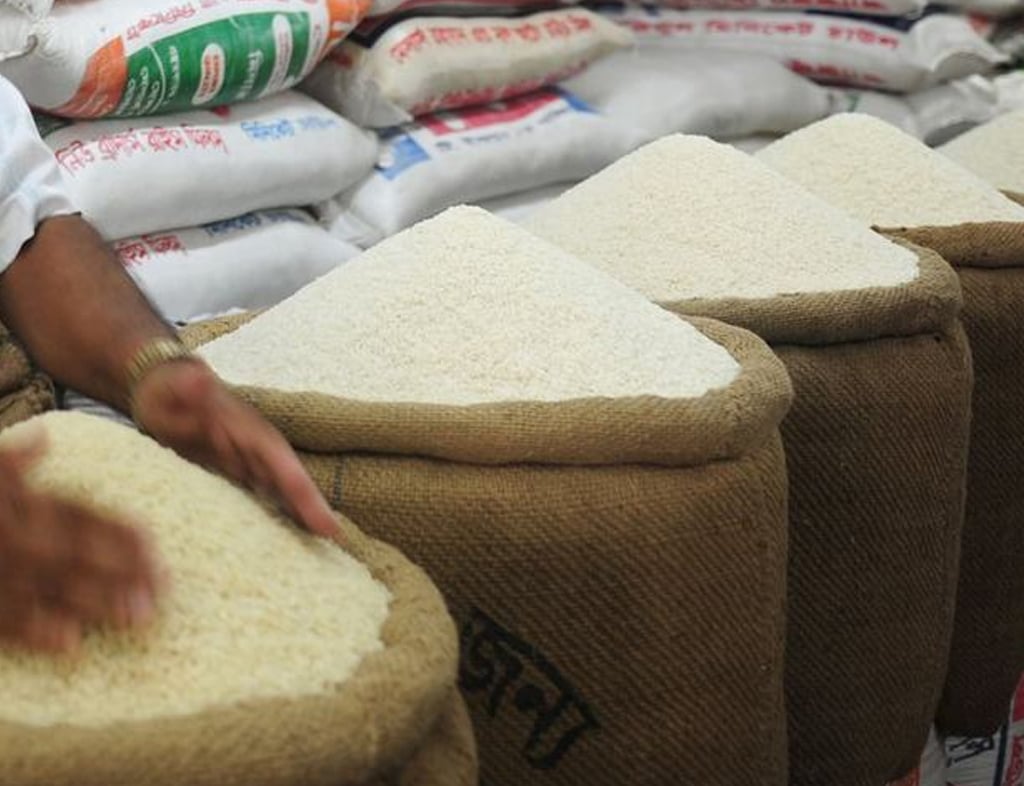 BENGALURU/BANGKOK/HANOI/MUMBAI/DHAKA: Prices of rice exported from Vietnam rose this week, as trade routes to China reopened with some traders betting on additional demand from buyers looking for alternate sources due to the Ukraine crisis. Vietnam’s 5% broken rice were offered at $400 per tonne on Thursday, versus $395-$400 a week ago. “Shipments to China are expected to increase as China is reopening borders with Vietnam after coronavirus curbs,” a trader in Ho Chi Minh City said. “The ongoing Ukrainian war might prompt buyers to import more rice from Asia, including Vietnam,” the trader added. A Bangkok-based trader said the situation in Ukraine “might have increased freight rates slightly.” Prices of Thailand’s 5% broken rice widened slightly to $403-$400 per tonne from $400 last week, also taking cues from currency fluctuations with the baht valued at 32.60 against the US dollar on Thursday. But another trader said the crisis has not impacted Thai rice exports because neither Russia nor Ukraine were among its main trading partners. Ukraine’s military recently suspended commercial shipping at its ports, threatening grain and oilseed exports. Demand for rice from top exporter India improved, but prices of its 5% broken parboiled variety were unchanged at $370-$376 per tonne as the rupee weakened, translating into higher margins for traders from overseas sales. “Demand for broken rice has improved as prices of corn are rising. Some buyers are looking for alternatives to corn,” said an exporter based at Kakinada, Andhra Pradesh. Indian farmers may harvest a record 127.93 million tonnes versus 124.37 million tonnes the year before. Meanwhile, domestic rice prices stayed high in Bangladesh, despite good reserves, officials said.Freight rates have increased slightly due to the Ukraine crisis, prompting higher import costs for grains, a trader said.
Asia rice: Vietnam rates rise as activity picks up, India market subdued
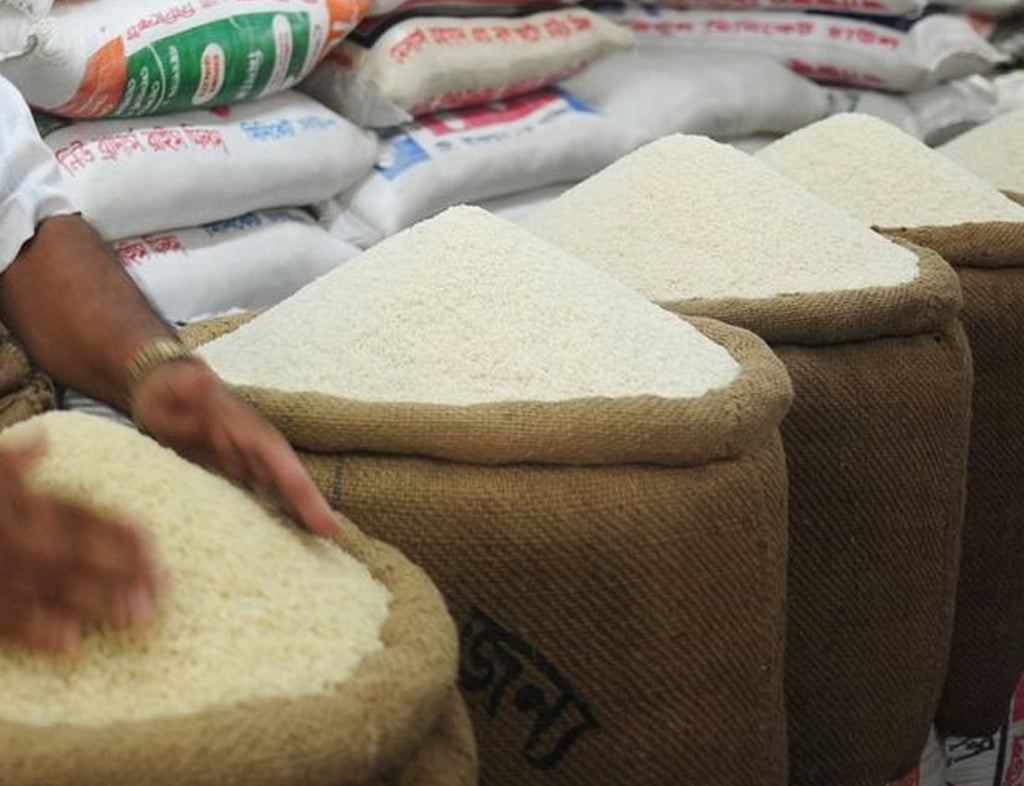 SINGAPORE: Prices of rice exported from Vietnam rose to a two-month high this week as market activity picked up again following the holidays, while low demand kept Indian rates near a one-month low. Vietnam’s 5% broken rice was offered at $400 per tonne on Thursday, the highest since mid-December and up from $395 a week ago. “Prices have edged up slightly as trading activity is resuming following the Lunar New Year Holiday and demand is seen picking up,” a trader based in Ho Chi Minh City said, adding that traders were buying moderate amounts from farmers ahead of the upcoming winter-spring harvest. Some traders said they will be joining a tender issued by South Korea’s state-backed Agro-Fisheries & Food Trade Corp to purchase an estimated 72,200 tonnes of rice. Top exporter India’s 5% broken parboiled variety was unchanged at $368-$374 per tonne, holding near the lowest in more than a month as demand was muted from key buyers. “White rice buyers are shifting to Myanmar and Pakistan because of lower prices,” said a Mumbai-based dealer with a global trading firm. Indian farmers are likely to harvest a record 127.93 million tonnes, compared with 124.37 million tonnes the year before. Meanwhile, rain-fed rice output in neighbouring Bangladesh is expected to rise to 15 million tonnes this year, as farmers raised acreage to cash in on higher prices and favourable weather, according to the country’s Agriculture Ministry. But despite the good crops and reserves, Bangladesh has been battling high domestic prices of the staple. Thailand’s 5% broken rice prices were quoted at $410-$420 per tonne, up from $407-$415 last week, mainly due to a change in the exchange rate, traders said, with the baht having gained 1.7% versus the dollar from Feb. 11 till Thursday. But a Bangkok-based trader said prices could soon weaken as the off-season harvest begins.
Vietnam offers cooperation in textiles, rice production
- KARACHI: Nguyen Tien Phong, Ambassador of Vietnam in Pakistan, on Friday proposed that building partnership in textiles and rice production would help two nations strike new avenues in world trade. “Business communities of both sides should not think that being big producers and competitors in rice and textiles, we cannot cooperate,” Ambassador Phong said talking to the officials of Federation of Pakistan Chambers of Commerce and Industry at their office. In fact, he emphasised, “we can beautifully complement each other for a win-win mechanism”. He also expressed his profound and enthusiastic desire that Preferential Trade Agreement (PTA) between Pakistan and Vitnam should be signed through fast-tracking the initiative and implemented effectively to multiply the trade volumes. Phong added that he would certainly relay the concerns and suggestions on visa regime back to their ministry’s head office in Vietnam and he also wanted the duration of business visas for Pakistani businessmen increase from six months to one year. The Vietnamese envoy maintained that the bilateral trade volume of $600 million per year was just not sufficient and it could be taken to $5-10 billion given the true potential for exponential growth over the upcoming years. For this he strongly emphasized on the visits of businessmen from Pakistan to Vietnam and vice versa. Hanif Lakhany, Vice President FPCCI, expressed his desire to expand trade relations with Vietnam as there was untapped potential in a number of sectors. Lakhany proposed that Vietnam should consider investing in smartphone and computer chips, parts and accessories, in Pakistan being one of the most advanced large-scale producers in the sector. Suleman Chawla, SVP-elect of FPCCI for 2022, said the chamber would do its best to strengthen and enrich economic and commercial ties between the two countries.
Vietnam to buy 200,000 T rice from farmers for stockpiling
 HANOI: The Vietnam government will buy 200,000 tonnes of rice from local farmers for stockpiling, it said on Tuesday, amid falling domestic prices. Paddy price in the Southeast Asian country, the world’s third-largest rice exporter, have fallen by 25-30 percent since the start of this year, according to traders.
Vietnam loses out on global market without rice brand
 Long An (VNS/VNA) – Trung An Hi-tech Farming JSC in the Mekong Delta has been exporting rice under foreign brand names for many years though it is itself one of the biggest rice exporters in Vietnam. Speaking to the media on the sidelines of the third Vietnamese Rice Festival in Long An province last December, Pham Thai Binh, the company’s director, said to let consumers know about Vietnamese rice products, exporters like his company have to be able to show consumers their brand logos. “But at the moment we still depend on buyers, which means they decide the packaging and labelling and we only have to follow instructions. “Some markets allow the phrase ‘origin in Vietnam’ to be written on the package, and that is already quite generous.” He said foreign buyers usually order in bulk and want 50kg packaged under their name. “They do not have to introduce Vietnamese rice to consumers, they just want to promote their own brands.” According to the Ministry of Agricultural and Rural Development (MARD), Vietnam exports to 150 markets yet global recognition of Vietnamese rice brands is still very low. Last December, it unveiled the official Vietnam rice brand logo hoping to create a firm foothold in the global market. Binh said it was an important move because it would help consumers identify Vietnamese rice since the logo is on the package. But having a national brand does not mean it would automatically enhance the value of Vietnamese rice, he said. “Whether or not we can increase the value depends on the quality of the product. Quality decides everything. Even the national rice brand can only be successful if companies and farmers collaborate to improve product quality.” Nguyen Quoc Toan, Acting Director of MARD’s Department of Agricultural Market Processing and Development, had emphasised the importance of quality at the launch of the national brand logo. “The main issue [when building a brand for Vietnamese rice] is product quality because no brand will be accepted when the quality is poor. “First and foremost, we need to improve the quality of our rice grain to not only meet the requirements of traditional rice markets but also niche markets in future.” He said enterprises and farmers must work together very closely to enhance the value of Vietnamese rice. Dr Nguyen Duc Thanh, Director of the Institute of Economic and Policy Research, told Vietnam News that consumers are now more demanding than ever. “They want to buy clean and organic rice whose production is traceable.” He said farmers have to meet those requirements but cannot do it by themselves. They have to work with enterprises because the latter work directly with consumers and have the responsibility to ensure people can buy good quality products, he said. “Only by joining hands can farmers and enterprises tap foreign markets.” He also pointed out that due to low productivity, farmers have to grow three rice crops a year instead of two as recommended by scientists for sustainability, which leads to low quality and almost no value addition. If the non-agricultural sector grows further, farmers could abandon the third crop, he said. “Production may decrease but quality will improve and bring more value.” According to Dr Nguyen Van Sanh, former director of the Mekong Delta Development Research Institute, the delta, the country’s rice basket, has been hit by climate change in recent years, which has brought challenges such as changing water flows, low market competitiveness and overexploitation of agricultural resources. Besides, production costs increase while quality deteriorates, he said. “To develop a sustainable rice industry, farmers, enterprises and administrators must be ‘smart’ in production and trading.” It can be done by selecting appropriate rice varieties, making use of ecological advantages through regional and sub-regional integration, improving production techniques, and adopting effective mechanisms and policies, he added. Dr Thanh noted that enterprises need to pay more attention to communication and advertising to build their brands in the domestic market first before expanding overseas. He said though advertising is costly, without communication consumers cannot know and would continue to think that foreign rice is better than Vietnamese rice though it is not always the reality. He said high-income families prefer to buy imported rice from Japan, Thailand or South Korea, and so building rice brands should not only be for international markets but also the domestic market. “We can sell Vietnamese rice at supermarkets overseas but on a small scale. At the moment the biggest market for us is the domestic market. “It has 100 million people who eat rice every day. Only a small number of highly selective consumers care about rice brands while the majority are indifferent. “The domestic market is very sustainable for us as it is familiar and we have knowledge about the local market and consumers,” he said.-VNS/VNA
MARD issues regulations on ’VIETNAM RICE’ national brand
-
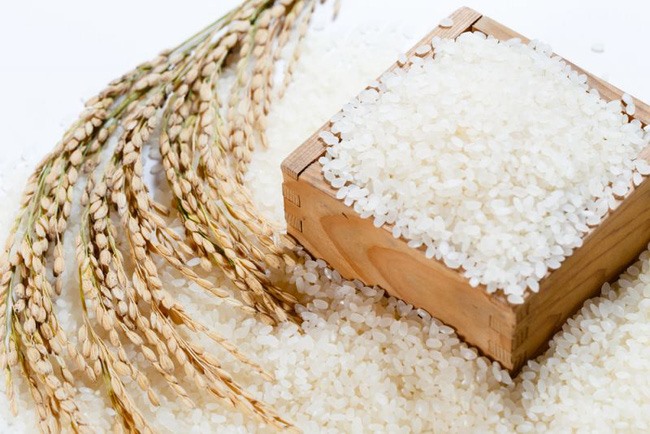
Organisations and individuals must also have certificates for rice products, in accordance with the Vietnamese standards (TCVN) and fulfil their tax obligations and ensure environmental protection. — Photo cafef.vn
Viet Nam NewsHÀ NỘI — The Ministry of Agriculture and Rural Development (MARD) has issued regulations on the use of national brand GẠO VIỆT NAM or VIETNAM RICE. The rice national brand is designed to promote products, maintain prestige, create trust among consumers, as well as improve the competitiveness of Việt Nam’s rice products in the domestic and international markets. Organisations and individuals shall be entitled to use the brand when they are granted business registration certificates, enterprise registration certificates or investment certificates, along with the contents of registration for operations, processing or trading of rice products. In addition to these, organisations or individuals can own the national brand if the competent agencies grant certificates of eligibility regarding food safety in rice processing, preservation and trading or if their establishments have been granted one of these certificates: Good Manufacturing Practices; Hazard Analysis and Critical Control Point System; Food Safety Management System ISO 22000; International Food Standards, BRC Global Standards; Food Safety System Certification 22000 or equivalent valid certificates. Organisations and individuals must also have certificates for rice products, in accordance with the Vietnamese standards (TCVN) and fulfil their tax obligations and ensure environmental protection. The regulations also specify the products of rice (white rice, white fragrant rice, white sticky rice) that own brand certification. MARD has authorised the Vietnam Food Association to manage the national brand GẠO VIỆT NAM/VIETNAM RICE. — VNS
Read more at http://vietnamnews.vn/economy/427523/mard-issues-regulations-on-vietnam-rice-national-brand.html#zc8XSmCxrRsh8d3F.99
VN strives to increase rice exports by 2030
-
Vietnam aims to export four million tonnes of rice by 2030, pursuant to a strategy for developing the country’s rice export market in the 2017-20 period with a vision to 2030.

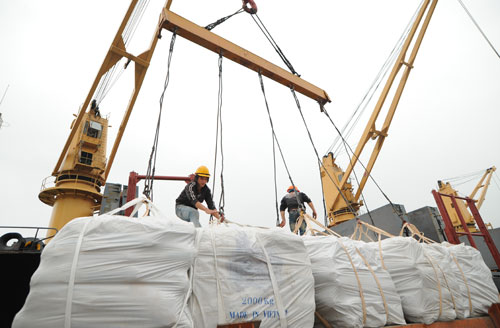
Rice loading at Sai Gon port. The country’s rice exports recorded 6.3 per cent in volume and 5 per cent in value in the first half of this year.
Under the strategy, which has been approved by the Prime Minister, by 2030, exports of fragrant rice, specialty rice and Japonica rice will account for the largest proportion of the total volume of exported rice at 40 per cent, followed by glutinous rice and white rice exports at 25 per cent per each. Meanwhile, the proportion of high-quality, high-value, organic, highly-nutritious rice and products made from rice will be some 10 per cent. The Asian market is expected to consume some 50 per cent of Viet Nam’s total rice exports, followed by African and Middle Eastern countries at 25 per cent and 5 per cent, respectively, the European market at 6 per cent and the American and Oceania markets at nearly 14 per cent. Viet Nam’s rice export growth has regained momentum this year following a year of slowdown, statistics from the Ministry of Agriculture and Rural Development have revealed. About 2.8 million tonnes of rice were shipped abroad for a turnover of US$1.2 billion in the first half of this year, up 6.3 per cent in volume and 5 per cent in value. China remained the top importer of rice from Viet Nam in the reviewed period.
Rice exports to Russia shoots up 700 percent
-
Rice is processed for exports at a factory in Ho Chi Minh City. Vietnam exported more than 14,700 tonnes of rice to Russia in the first five months of this year (Photo: VNA)
Hanoi (VNA) – Vietnam exported more than 14,700 tonnes of rice worth 5.56 million USD in the first five months of this year to Russia, a year-on-year increase of 707 percent in volume and 662.6 percent in value, according to statistics from the General Department of Vietnam Customs. In the period, the country raked in 1.1 billion USD from shipping nearly 2.4 million tonnes of rice abroad, up 1.1 percent in quantity and 0.2 percent in revenue from the same time last year. The country saw a robust growth in the rice shipment to China – its largest rice consumption market. Nearly 1.1 million tonnes of rice were sold in the country at 488 million USD, up 33.6 percent in volume and 31 percent in value. The amount accounted for 46 percent of the country’s total rice exports. Expansion in Vietnamese rice exports was also seen in the Philippines and some European countries like Ukraine, Belgium and France. However, the country’s rice shipments experienced steep fall from 40-99 percent in Hong Kong (China), Taiwan (China), Indonesia, Poland and Turkey. The price of Vietnamese export rice has hit a three-year high thanks to the rising import demands and the restricted supply source. According to the Ministry of Industry and Trade, the demand for Vietnam’s 5 percent broken rice, has been rising, hitting 390 USD per tonne in the early days of June, against 360 USD per tonne to 380 USD per tonne in late May. This is the highest price since December 2014, the ministry said, attributing it to the rising global demand for rice imports, especially in the Asian region. The export price rise has also caused the paddy price in the domestic market to soar. A tonne of 5 percent broken rice in the domestic market stood between 7.65 million VND (340 USD) and 7.75 million VND in early June, up 550,000 VND (24 USD) per tonne against last month. The global rice market has been heating up after top importing countries, such as Bangladesh and the Philippines, announced to import roughly 950,000 tonnes of rice recently. Experts have forecast that the global rice price will increase by roughly 20 USD per tonne in the next three months. They have advised rice exporting enterprises to not sell the crop in a hurry, hoping that the price of 5 percent broken rice would increase to at least 400 USD per tonne.-VNA
Rice prices increase in both domestic, foreign markets
-

Loading rice for export at Saigon Port (Illustrative image. Source: VNA)
HCM City (VNA) – Vietnamese rice prices have recently increased in both domestic and foreign markets due to high demand and limited supply. Notably, Jasmine rice price is now at 565-570 USD per tonne, 65-70 USD per tonne higher compared to three weeks earlier. At the same time, Vietnam’s 5-percent broken rice is sold at 410-420 USD per tonne, up 35-45 USD per tonne, while the price of 25-percent broken rice also rises 25-30USD per tonne to 370-375 USD per tonne. In the world market, Vietnamese rice price is only lower than Thai rice’s. In the domestic market, rice prices of all kind also increased over 1,000 VND per kilo averagely. Nguyen Van Don, Director of Viet Hung Company in the Mekong Delta province of TienGiang, said the demand for Jasmine rice has surged recently, while the supply of the rice is low and some farmers are still waiting for higher price before selling their rice. Many businesses attributed the recovery in both markets to the increased consumption in the world. Recent information on some countries’ demand to import Vietnamese rice also heat the domestic market. Particularly, Bangladesh has signed a memorandum of understanding on rice trade and announced its demand of importing 250,000-300,000 tonnes of Vietnam’s 5-percent broken rice in the coming time and about 500,000 tonnes for the whole year, while the Philippines also revealed its plan to buy 250,000 tonnes of rice in June and July. According to the Vietnam Food Association, Vietnam suffered a drop in rice export in the first five months of this year. However, the export has recovered since May with rise of 27.3 percent in volume and 24 percent in value in May.-VNA
Việt Nam to be among largest rice producers: FAO
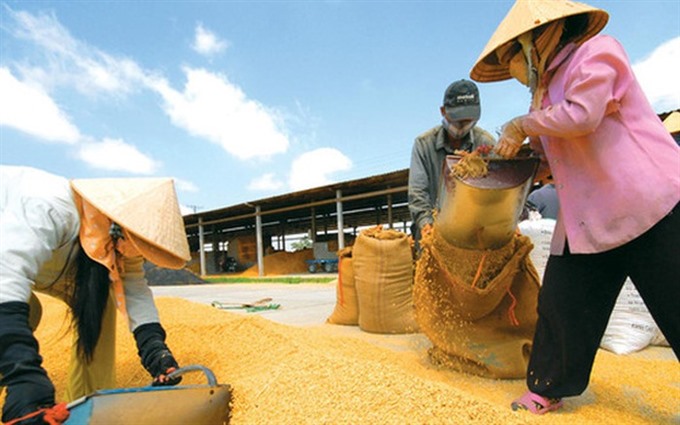 Việt Nam is expected to be the world’s fifth largest rice producer in 2017. — Photo cafef.vn Viet Nam News HÀ NỘI — Việt Nam is expected to be the world’s fifth largest rice producer in 2017, according to the Crop Prospects and Food Situation report released by the UN’s Food and Agriculture Organisation (FAO). FAO forecast that the biggest rice producer this year will be China with 142.3 million tonnes, followed by India with 110.4 million tonnes, Indonesia and Bangladesh. The report said the global rice output was likely to increase by 0.7 per cent to 502.3 million tonnes, thanks to production facilitation policies in Asia and yield recovery in South America and Australia. After two years of decrease, global rice exports are predicted to expand by 5 per cent in 2017 to 44.2 million tonnes, when compared with 43.6 million tonnes in the previous year, with India expected to remain the largest rice exporter. The organisation said global rice prices have been stabilised since early 2017 due to the increasing demand and currency reforms in India and Thailand. — VNS Read more at http://vietnamnews.vn/bizhub/378408/viet-nam-to-be-among-largest-rice-producers-fao.html#ZbZUhAsWIjHDD37E.99
Asia Rice-Strong demand helps prices extend gains
-
* Prices rise in Thailand, India, Vietnam * Bangladesh seals import deal with Vietnam By My Pham VIETNAM, June 15 Asian rice prices rose this week, extending gains from the week before on strong demand from importers including Bangladesh and the Philippines, traders said on Thursday. In Thailand, benchmark 5-percent broken rice RI-THBKN5-P1 was quoted at $450-$457 a tonne, free-on-board (FOB) Bangkok, up from $440-$457 last week. Thai rice prices have been rising steadily since March, when traders started loading ships, and touched levels unseen since August 2013 last week. Exporters continue to buy the grain from rice millers to fulfill shipments, with demand from Bangladesh, Iran, Iraq and the Philippines keeping prices high, traders said. “Prices are still rising and haven’t stopped,” a Bangkok-based trader said. “Supply is low and exporters are still buying stocks for shipment, and global demand is still high.” The Thai off-season crop is expected to arrive from around August to September. In Vietnam, the 5-percent broken rice RI-VNBKN5-P1 was quoted at $410 a tonne, FOB Saigon, up from $395-$400 last week and the highest level since November 2014. Vietnam’s new harvest season begins late-June, traders said. Rice prices in the country have increased since early May on expectation of stronger demand from foreign rice importers amid limited supply. Bangladesh will import 200,000 tonnes of white rice at $430 a tonne, and 50,000 tonnes of parboiled rice at $470 a tonne from Vietnam in a government-to-government deal, said Ataur Rahman, additional secretary at the food ministry. The rice will be shipped in 60 days, with the first consignment expected to arrive in 15 days, Rahman said.
Bangladesh is also in talks with Thailand and India to import rice to cool record-high local prices at a time when state rice stocks are at 10-year lows. The Philippines has said it would issue a tender next month to import 250,000 tonnes of the grain from Thailand and Vietnam, and possibly also India. In India, 5 percent broken parboiled rice prices RI-INBKN5-P1 jumped by $7.00 per tonne to $422-$425 on a rally in overseas prices and good demand from buyers in Africa. “Earlier, buyers were shifting to other suppliers as Indian rice was expensive. Now, since prices have risen in Thailand and Vietnam, we are equally competitive,” said an exporter based in Kakinada in the southern Indian state of Andhra Pradesh. India’s non-basmati rice exports in April fell 18.5 percent from a year ago to 475,050 tonnes due to a stronger rupee. “We have to raise prices considering (the) rising rupee and tight supplies of paddy rice,” said another exporter based in Kakinada. The rupee has risen 5.7 percent so far in 2017 and is trading near its highest level in 21 months. A strong rupee trims returns for exporters. (Reporting by My Pham in HANOI, Patpicha Tanakasempipat in BANGKOK, Rajendra Jadhav in MUMBAI, and Ruma Paul in DHAKA; Editing by Biju Dwarakanath)
Bangladesh to import 250,000 tonnes of rice from Vietnam at raised prices
-

Vietnamese rice prices in May hit their highest in over a year
Bangladesh is set to buy 250,000 tonnes of white and parboiled rice from Vietnam at prices $50-$90 higher per ton than the previous month, to maintain immediate availability of stock in the market, as well as reserves. According to the food ministry proposal, the government will be importing 200,000 tonnes of white rice at $430 per ton, though the price per ton was $380 in the last month. The ministry is also planning on procuring 50,000 tonnes of parboiled rice at a cost of $470 per ton, while the price had been less than $450 just a week ago. In addition, in a recent international tender by the food ministry, parboiled rice was listed at $ 427.85 per tonne and white rice was at $406.48. The country’s rice stock has hit a 5 year low, at 193,000 tonnes.
Also Read- Dhaka offered Tk36 per kg for 50,000 tonnes of rice
The food ministry’s proposal to import the specified amount of rice will be placed before the cabinet committee for public purchase on Wednesday, requesting Tk908.85 crore in funds. Finance minister AMA Muhith will preside over the meeting, according to a procurement official. Vietnamese rice prices in May hit their highest in over a year on expectations of strong demand from top importing countries such as Bangladesh and the Philippines. Cost per kg of the parboiled rice imported from Vietnam will stand at Tk39.01, while it will be Tk35.69 for white rice.
Also Read- Bangladesh to speed up rice imports in wake of flooding
An official of the Finance Division said that the government allocation to procure wheat and rice from domestic sources was not utilised as high prices were demanded by farmers and rice millers. The situation arose as the government had set the price of rice at Tk37.40 per kilogram, at a time when coarse rice was selling at between Tk45 and Tk50 per kilogram.
 During a question and answer session at Jatiya Sangsad last week, Food Minister Qamrul Islam had said rice reserves were slightly lower compared to the same time last year.
Also Read- Vietnam and Bangladesh extend rice trade deal to 2022
“The government has already planned to import 600,000 metric tonnes of rice from abroad to meet the shortfall in the crop due to premature flooding in the Haor region,” he said. The minister had also said that, as per the plan, the government has already called for international tenders for the import of 300,000 metric tonnes of rice. Earlier in the year, on May 23, the food minister had signed an MoU to finalise the rice imports with Vietnamese Industry and Trade Minister Tran Tuan Anh in a government-to-government deal, during a Bangladeshi delegation’s visit to the country.
Vietnam rice export back on track
-
Vietnam’s rice export growth has regained momentum this year after a year of slowdown, according to a report by the Vietnam Food Association (VFA).

Stevedores at work at a rice storehouse in the Mekong Delta. Vietnamese rice export has regained growth momentum this year after a year of plunge
Vietnam exported 2.3 million tons of rice worth US$1 billion in the first five months of the year, up 1.6% in volume and 1.2% in value year-on-year. China remained Vietnam’s largest rice importer, accounting for 47.5% of the nation’s total rice exports. More than 815,000 tons of rice costing over US$376 million went to the northern neighbor in January-April, up 16.1% and 16.2% against the same period last year respectively. Vietnam shipped 4.89 million tons of rice valued at US$2.1 billion in all of 2016, a respective decrease of 25.54% and 20.57% against 2015. China was still Vietnam’s biggest importer of the food staple last year despite a 19.79% decline. It purchased more than 1.8 million tons of rice from Vietnam last year, 36.97% of Vietnam’s total rice shipments. The domestic rice price has improved by VND200-300 a kilo, supported by the recent signing of a memorandum of understanding to export one million of rice a year to Bangladesh until 2022. The South Asian country will import 300,000 tons at first. In addition, the National Food Authority (NFA) of the Philippines has announced to buy 250,000 tons of rice from Vietnam in June. Nguyen Thanh Tho, a rice trader at Ba Dac wholesale market in Tien Giang Province, told the Daily that IR 50404 rice is sold at VND4,350-4,400 a kilo, an increase of VND200-300, helped by the Bangladesh rice deal. Besides, IR 50404 material rice is purchased at VND6,350-6,450 a kilo in the Mekong Delta, up VND200. Major importing markets, especially Bangladesh and the Philippines, have helped buoy the price. The Free On Board (FOB) price of 5%-broken white rice from Vietnam is US$370-380 a ton, up US$5-10 compared to a week ago.
Bottlenecks in rice production chain affecting market share
-
VietNamNet Bridge – Vietnam’s rice production is meeting difficulties because of two bottlenecks at the ends of the production chain, leading to a decline in market share.
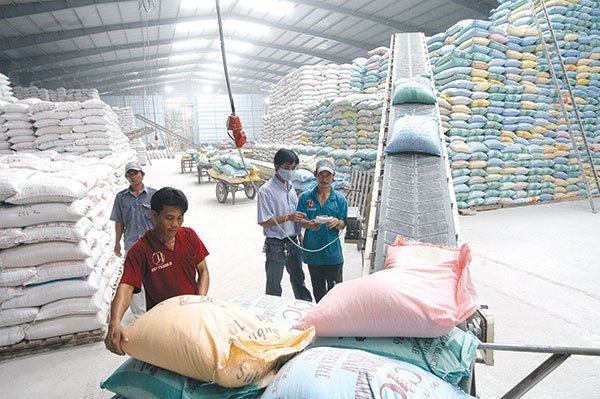 According to IPSARD, the first bottleneck is related to supply. Two-thirds of the rice surplus is in the hands of 20 percent of the biggest farmers – producers with an average cultivated area of 2.74 hectares. Of 9 million households that grow rice, rice productivity from the biggest 300,000 households accounts for the large proportion of rice exports. The ‘bulge’ in the rice value chain is processing. While rice cultivation depends on a number of large households, the processing is carried out at over 300,000 factories, most of which are small scale.
Vietnam’s rice production is meeting difficulties because of two bottlenecks at the ends of the production chain, leading to a decline in market share.
There are only 1,000 processing factories in Thailand. The second bottleneck lies at the end of the chain – exports. There are only about 100 exporters, and only 22 exporters have licenses to export rice to China. A report of the Ministry of Agriculture and Rural Development (MARD) shows that Vietnam’s rice exports in 2016 decreased by 27 percent in quantity and 23 percent in value compared to 2015, the lowest 8-year level. The rice exports to China, Vietnam’s largest export market, have also decreased. The exports to choosy markets, including the EU, the Middle East and Sub-Sahara, account for only a few percent of total exports. Rice demand to recover? According to Sergio Araujo from FAO Rome, the challenges for Vietnam are that it needs to shift from low-cost to high-end rice and to distinguish between Vietnam’s rice and rice from other countries. In fact, the competition in the high-end rice market segment is very stiff. Thailand has increased its high-end rice standards and set up a research institute for added value in the rice sector. India is focusing on improving technical standards for basmati rice and making efforts to increase the production of organic rice. The demand for rice is on the decrease as people want products richer in protein such as meat, seafood, eggs and milk. Meanwhile, according to Pham Kim Dung from IPSARD, Vietnam’s loyal markets are now applying necessary measures to ensure food security. However, according to WB and IMF, the rice price still is moving up in the short term because of increased demand for storing rice. Malaysia has decided to increase the import volume to 950,000 tons. Bangladesh has announced it would import 600,000 tons, considering supply from Vietnam.
Vietnam’s 5 pct broken rice average hits $390/tonne, highest since Dec 2014
- Vietnam’s 5 percent broken rice average price hit $390 a tonne, its highest level since December 2014, on Thursday on expected stronger demand from foreign importers, traders said. The rise came after Bangladesh said it would buy 250,000-300,000 tonnes of Vietnamese rice immediately and increase rice imports from Vietnam to 500,000 tonnes by end-2017. The Philippines also said it would issue a tender to import rice from key suppliers Thailand and Vietnam and possibly India. (Reporting by My Pham; Editing by Nick Macfie)
Asia Rice-Importer demand pushes prices, Vietnam hits near 2.5-yr high
-
Prices in Vietnam near 2.5-year high * Thailand jumps to highest level in almost 1 year By My Pham HANOI, June 1 Strong demand from top importing countries has led to a spurt in Asian rice prices, with the grain being quoted at its highest in nearly two and a half years in Vietnam and touching almost a year-high in Thailand, traders said on Thursday. Vietnam’s 5-percent broken rice RI-VNBKN5-P1 was quoted at a level unseen since December 2014, at $390 a tonne, FOB Saigon, up from $360-$380 last week, as suppliers looked forward to export deals, traders said.
However, trade in Vietnam was thin despite higher prices as traders and farmers hold on to stocks expecting a further jump in prices. “People expect prices to rise to $400 and even more, so they don’t want to sell now. Traders want to wait and see,” said a trader based in Ho Chi Minh City. Bangladesh said it will buy 250,000-300,000 tonnes of Vietnamese rice immediately and plans to increase rice imports from Vietnam to 500,000 tonnes by end-2017. It will also buy one million tonnes of Vietnamese rice annually until 2022. Meanwhile, the Philippines also said it would issue a tender next month to import 250,000 tonnes of the grain from Thailand and Vietnam, and possibly also India. Likewise, prices also jumped in Thailand and India, the world’s first and second biggest rice exporters, respectively. Thai benchmark 5-percent broken rice RI-THBKN5-P1 rose this week to $430 a tonne, free-on-board (FOB) Bangkok, from $411-$412 last week, the highest level in almost a year. Thai prices have risen sharply since April, leading to a greater gap over prices in Vietnam, Thailand’s main competitor, but traders said they have not yet lost buyers. “The upward price trend continues normally as there is demand and purchases are made,” a trader in Bangkok said, adding that ships were still coming in to load the grain. Traders also said the price hike has started making the local grain too expensive for them to buy for export. “Exporters have to be careful, because local prices are higher now than when deals were made, making us fulfill shipments at our own loss,” another trader in Bangkok said, adding that some traders had shied away from fresh deals. Thai prices are expected to stabilize in the next few weeks, traders said. In India, the 5 percent broken parboiled rice RI-INBKN5-P1 jumped $15 per tonne to $413 to $416 on improvement in demand and following a rally in overseas prices. “Export inquiries have risen in the past few days. Indian rice has become competitive as prices are rising in Thailand and Vietnam,” said an exporter based in Kakinada in the southern state of Andhra Pradesh. In the last few months Indian exports had slowed down due to an appreciating rupee and as local paddy prices rose, eroding the competitiveness of exporters. The rupee has risen nearly 5 percent so far in 2017 and is trading near its highest level in 21 months. A strong rupee trims returns of exporters. “At the current price level we can sign export deals. African buyers have stared purchases,” said another exporter based in Kakinada. (Reporting by My Pham in HANOI, Patpicha Tanakasempipat in BANGKOK, Rajendra Jadhav in MUMBAI; Editing by Sunil Nair)
Vietnam rice exporters face challenges
-
The rice price is forecast to continue soaring in near future, buoyed by the higher demand for rice of some countries, but Vietnam is having difficulty boosting rice shipments, heard a seminar in Hanoi last week.

A study conducted by the Institute of Policy and Strategy for Agricultural and Rural Development shows there are nine million rice farming households nationwide, but around 300,000 of them account for the bulk of Vietnam’s rice export volume. Meanwhile, the nation has over 300,000 rice milling facilities, but a majority of them are small. But in Thailand, there are a mere 1,000 rice milling plants. Besides, Vietnam has around 100 rice exporters, but a mere 22 of them focus on China, one of Vietnam’s largest rice buyers. Industry experts said these two hindrances had led to the global market share of Vietnamese rice shrinking. Statistics of the Ministry of Agriculture and Rural Development show the country’s rice shipments last year dropped 27% in volume and 23% in value against 2015. Vietnam has seen gradual declines in rice exports to China, European Union, Middle East, and Sub-Saharan Africa. Despite the decrease in rice exports, local enterprises have shown little or no interest in the domestic market. Vietnamese rice producers have not been able to develop premium rice brands, according to Sergio René Araujo Enciso, an economist from the Trade and Markets Division under the Food and Agriculture Organization of the United Nations. Key importers of Vietnamese rice products have adopted food security policies. China, for instance, is buying rice from different countries, said Pham Kim Dung, the study’s lead researcher. The World Bank and the International Monetary Fund forecast that rice prices might inch up in the short term as some countries are stocking up on rice, such as Malaysia with 950,000 tons and Bangladesh with 600,000 tons.
Vietnam: Upbeat signs for Vietnamese rice exports
- Thai News Service Encouraging signs for rice exports after a down-period have boosted the Vietnamese rice market. According to the Vietnam Food Association (VFA), the country earned free-on-board (FOB) export value of more than 701 million USD from shipping 1.6 million tonnes of rice to foreign countries in the first four months of the year, down 14.2 percent in volume and 10.6 percent in value from the same time last year. However, Vietnamese rice exports recovered somewhat in April after a big slump in the first quarter. Exporters sold nearly 510 tonnes of rice abroad last month on FOB value of 220 million USD, a year-on-year increase of 14.6 percent in volume and 9.75 percent in value. VFA Chairman Huynh The Nang said that the Philippines plans to import 250,000 tonnes to augment its buffer stock for lean months from July to September. Some exporters have won tenders to supply 40,000 tonnes of the grain for Malaysia. Meanwhile, 40,000 tonnes of Jasmine rice was shipped to Iraq. Also, Bangladesh plans to buy 600,000 tonnes, including 50,000-100,000 tonnes of white rice with the remainder parboiled rice to offset crop damage caused by torrential rains. Lam Anh Tuan, director of Thinh Phat Food Co., Ltd, predicted a bright future for rice exports. He said that the fall in Thailand’s rice inventories will help the Vietnamese and global rice trade recover. Furthermore, Vietnamese enterprises are more competitive than their competitors as each tonne of Vietnamese rice sells for 350-360 USD while Thai, Indian and Pakistani rice is purchased at more than 390 USD per tonne, he added. The VFA said that drop in rice price has triggered an increase in the number of rice export contracts. However, enterprises are unsure if the positive signs are enough to significantly boost Vietnamese rice exports, with worries of being unable to meet demand from foreign countries rife. Improving rice quality and building rice brand names will make Vietnamese rice more competitive. – VNA
Asia Rice-Vietnam prices hit 13-month high; Thailand up on lower supply
-
May 25 Vietnam rice hit its highest level in over a year this week on potential export deals and prices in Thailand firmed up as supply eased, while the Indian variety gained on growing demand from Africa, traders said. Expectations of strong demand from top importing countries such as Bangladesh and the Philippines are fuelling the uptrend in Vietnam and Thailand rice prices. Vietnam’s 5-percent broken rice RI-VNBKN5-P1 was quoted at a level unseen since April last year, at $360-$380 a tonne, FOB Saigon, up from $365-$370 last week, as suppliers eyed export deals, traders said. Bangladesh said on Tuesday it will buy 250,000-300,000 tonnes of Vietnamese rice immediately and planned to increase rice imports from Vietnam to 500,000 tonnes by end-2017. It will also buy one million tonne of Vietnamese rice annually until 2022. The Philippines said on Monday it would issue a tender next month to import 250,000 tonnes of the grain from key suppliers Thailand and Vietnam, and possibly also India. Thai benchmark 5-percent broken rice RI-THBKN5-P1 firmed this week to $411-$412 a tonne, free-on-board (FOB) Bangkok, from $385-$411 last week, the highest in nine months. “Prices have strengthened greatly, and supply is running low while demand remains constant,” a trader in Bangkok said. But traders in Thailand and Vietnam said the price hike has started making the local grain too expensive for them to buy for export, raising a possibility for short supply in the market. “After the Bangladesh news, I can no longer buy anything,” said a trader in Ho Chi Minh City. “The market is really stressed already, even though there’s no real trade,” another trader said, referring to the Bangladesh deals. Thailand and Vietnam are the world’s second and third biggest rice exporters. In India, the world’s biggest rice exporter, 5-percent broken parboiled rice RI-INBKN5-P1 jumped by $7 per tonne to $398-$403, on a slight improvement in demand and a rally in local paddy prices. “Export prices are going up, tracking rise in other countries. Demand has also improved from African buyers,” said M.Adishankar, executive director at Sri Lalitha, an exporter based at Kakinada in the southern state of Andhra Pradesh. In the past two months, there has been a sharp rise in Indian rates on government buying and as appreciation in the rupee caused a rally in local paddy prices. “Rising paddy price in the local market has been forcing us to raise export prices,” said another exporter based in Kakinada. Global rice prices are likely to go further up due to demand from Bangladesh, Dhaka-based traders and government officials said. Earlier this month, Bangladesh’s state grains buyer said the country will import 600,000 tonnes of rice. Bangladesh, the world’s fourth-biggest rice producer with around 34 million tonnes, could emerge as a major importer this year, as low stocks and soaring prices led the government to import the grain. (Reporting by Patpicha Tanakasempipat in BANGKOK, Mai Nguyen in HANOI, Rajendra Jadhav in MUMBAI, Additional reporting by Ruma Paul in DHAKA; Editing by Vyas Mohan)
Future bright for Vietnam’s rice exporters
-
There are some positive signs for rice exports after a period of lull, the Viet Nam Food Association has said.

Farmers in Dong Thap Province harvest summer-autumn rice and sell at rather good prices.
According to Huynh The Nang, its chairman, the Philippines plans to import 250,000 tonnes to augment its buffer stock for the lean months. Bangladesh plans to import around 600,000 tonnes, including 50,000-100,000 tonnes of white rice and the rest parboiled rice, to offset crop damage caused by torrential rains. Some companies have won tenders to export 40,000 tonnes of the grain to Malaysia, he said. Viet Nam’s exports recovered somewhat in April after a big slump in the first quarter, according to a report by the association. Exporters shipped 509,628 tonnes last month for free-on-board value of US$228.9 million, a year-on-year increase of 14.6 per cent in volume and 9.75 per cent in value. Export earnings in the first four months were $701.1 million, a 10.62 per cent fall. China was the biggest buyer of Vietnamese rice in the first four months followed by the Philippines, Cuba, Ghana, and the Ivory Coast. Exports of high-grade white rice surged, accounting for nearly 33 per cent of total exports. Exports of glutinous and Japonica rice also went up sharply in the first four months, but shipments of low-and medium-grade varieties plunged. The association said the number of export contracts signed in April increased significantly after prices fell, making Vietnamese rice more competitive than others’. Thailand’s rice inventories have fallen and prices have risen, which could bring back last year’s price gap of $40 per tonne with Vietnamese rice, according to the association. Government-to-government deals are expected to shrink to very low levels as commercial export contracts dominate. According to the Department of Crop Production, farmers in the Mekong Delta had sown 950,000ha of summer-autumn rice. Nang said in some areas farmers had begun harvesting, and enterprises keep a close eye on harvests to buy paddy in time to meet new import demand. According to rice traders in Dong Thap Province, a kilogramme of OM5451 and OM4900 paddy in the field costs VND5,200-5,300, VND250 – VND300 higher than a year earlier.
Vietnam Expands Rice Export To Europe
-
However, it remains to be seen if Vietnamese businesses can take advantage of this opportunity as the EU has strict technical barriers, according to Lam Tuan Anh, Director of Thinh Phat Ltd Co. Only firms which have their own material areas and could control the quality of rice from cultivation to processing can access the market, Tuan Anh said, explaining that rice is a sensitive staple that is not included in many other free trade agreements. Despite being the world’s third largest rice exporter, Vietnam is still in the early stages of building an image in the EU. Experts said the EU is a promising market because of local consumers’ high living standards. Although only a few rice exporting countries compete in the market such as Myanmar, Cambodia and Thailand, they all have good quality rice, experts said, urging Vietnam to create a brand name for its rice. Vietnam’s Commercial Affairs Office in Sweden, Norway, Denmark, Finland, Iceland and Latvia, suggested Vietnamese businesses focus more on food safety to deliver their rice to Sweden and other Northern European countries. Vietnam’s rice exports to the region have remained limited in turnover and varieties, according to the office. Although demand for rice in Northern Europe is not huge, the region could be a promising market for Vietnamese rice if the country receives trade incentives and satisfies locals’ taste, a representative from the office said. Vietnam has a huge opportunity to export farm produce like rice, vegetable, fruit and honey to the EU. — BERNAMA
Vietnam looks to put rice on Europe’s plate
-
Up to 100,000 tonnes of Vietnamese rice will be shipped to the EU each year tax-free in 2018 following the Vietnam-EU Free Trade Agreement, helping local rice exporters penetrate the market.
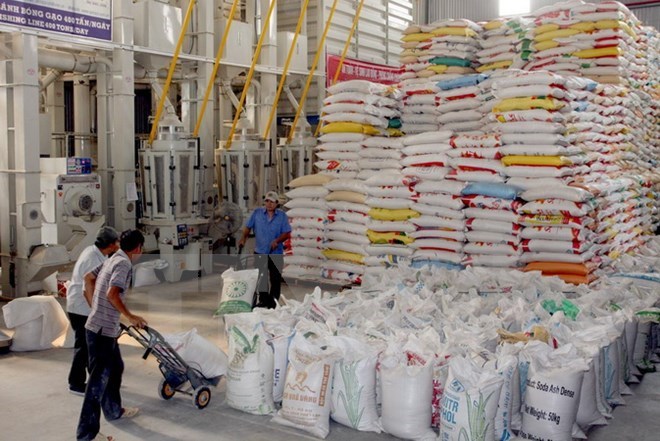
However, it remains to be seen if Vietnamese businesses can take advantage of this opportunity as the EU has strict technical barriers which most may struggle to satisfy, according to Lam Tuan Anh, Director of Thinh Phat Ltd., Co. Only firms which have their own material areas and can control rice quality from cultivation to processing can access the market, Tuan Anh said, explaining that rice is a sensitive staple that is not included in many other free trade agreements. Despite being the world’s third largest rice exporter, Vietnam is still in the early stages of building an image in the EU. Experts said the EU is a promising market because of local consumers’ high living standards. Although only a few rice exporting countries compete in the market such as Myanmar, Cambodia and Thailand, they all have good quality rice, experts said, urging Vietnam to create a brand name for its rice. Vietnam’s Commercial Affairs Office in Sweden, Norway, Denmark, Finland, Iceland and Latvia, suggested Vietnamese businesses pay more heed to food safety to deliver their rice to Sweden and other Northern European countries. Vietnam’s rice exports to the region have remained limited in turnover and varieties, according to the office. Although demand for rice in Northern Europe is not huge, the region could be a promising market for Vietnamese rice if the country receives trade incentives and satisfys locals’ taste, a representative from the office said. Vietnam has a huge opportunity to export farm produce like rice, vegetable, fruit and honey to the EU. The Netherlands, Vietnam’s third largest rice importer in the EU, just behind Germany and the UK, is expected to serve as a gateway helping Vietnamese products go in other EU countries. Many experts said that the Vietnamese Government should look to policy support and trade promotion to boost rice exports to the EU and Northern Europe in particular. Vietnam exported 1.1 million tonnes of rice in the first quarter of this year, down 23 percent in volume and 18 percent in value compared to the same period last year. China remained the largest rice importer in the period at 448,000 tonnes, 41 percent of total rice exports, followed by the Philippines and Africa with 20 percent and 13 percent, respectively.
Asia Rice: Thai, Vietnam Prices Hit Multi-Month High; India Stays Sluggish
-
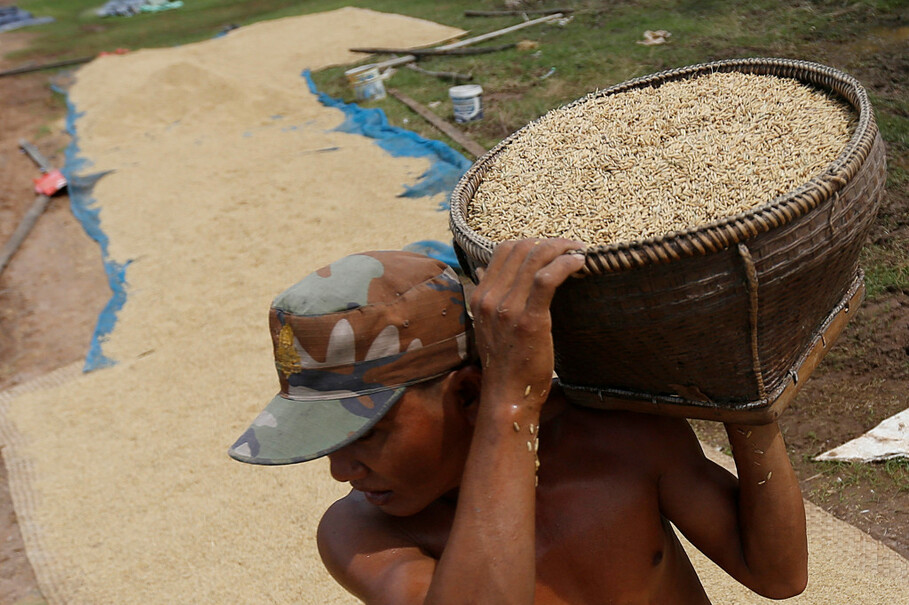 Bangkok/Hanoi. Rice prices hit multi-month peak in Thailand and Vietnam this week on export prospects, while high rates in India kept buyers at bay, traders said on Thursday (18/05). Thai benchmark 5-percent broken rice rose this week to $385-$411 a tonne, free-on-board (FOB) Bangkok, from $387-$392 last week. At a mean of $398 per tonne, Thai rice prices hit their highest in nine months, Reuters data showed. Traders said as Thai exporters are still buying stocks to fill shipments, heightened expectations of more demand from some of the world’s top importers also helped prices to surge.
Last week, Bangladesh’s state grains buyer said they will import 600,000 tonnes of rice. It has already issued two tenders for a total of 100,000 tonnes of rice. “Exporters continue to sell, ships are still being loaded, and big buyers are now coming in,” said a Bangkok-based trader. “If buyers keep purchasing, prices will keep increasing,” said another trader from Bangkok. Vietnam’s 5-percent broken rice was quoted at $365-370 a tonne, FOB Saigon, up from $355-$360 last week, following the trend in Thailand. Averaging $367.50 per tonne, Vietnamese rice prices are at an 11-month high, according to Reuters data. Anticipating more demand from leading importing countries, Vietnam traders are storing rice in order to sell later as prices advance. “People expect demand to jump further so they are not rushing to sell now,” said a Ho Chi Minh-based trader. Vietnam shipped an estimated 1.84 million tonnes of the grain between January and April, down 8.8 percent from the same period last year. Thailand and Vietnam are the world’s second- and third-biggest rice exporters. In India, the world’s biggest rice exporter, 5-percent broken parboiled rice prices eased by $3 per tonne to $391-$396 a tonne this week on sluggish export demand. In the past two months, there has been a sharp rise in Indian rates on government buying and as appreciation in the rupee caused a rally in local paddy prices. The rupee has risen more than 5 percent so far this year and is trading near its highest level in 21 months. A strong rupee trims returns of exporters, who cannot afford to cut prices. “African buyers are shifting to Vietnam. Indian rice is not competitive at the current price level,” said an exporter based at Kakinada in the southern state of Andhra Pradesh. India mainly exports non-basmati rice to African countries and premier basmati rice to the Middle East. The Indian government buys rice from local farmers at a fixed price to supply subsidized food and meet any emergency needs such as a sudden spike in prices. The government has bought 36 million tonnes rice from farmers so far in 2016/17, up 24 percent from a year ago. Reuters
China emerges as Vietnam’s largest fragrant rice importer
-
China, already the largest importer of Vietnam’s sticky rice, has emerged as the biggest buyer of Vietnamese fragrant rice, according to exporters.

Farmers are seen harvesting rice in the Mekong Delta
Last month Vietnam exported over 140,000 tons of fragrant rice, with 36% of it going to the Chinese market, which made China the largest importer of this kind of grain. Ivory Coast and Ghana were the second and third largest importers of Vietnamese fragrant rice last month with each buying about 30,000 tons. Singapore and Malaysia were also among the top fragrant rice markets of Vietnam in April but their import volumes were insignificant. The country’s total fragrant rice exports in January-April amounted to over 355,000 tons, with China alone accounting for a staggering 46%. Ivory Coast, Ghana, Malaysia and Singapore were also major importers of Vietnamese fragrant rice in the first four months of the year. China is also known as Vietnam’s largest glutinous rice importer. Last year glutinous rice shipments to China amounted to over 940,000 tons, accounting for over 90% of the total. According to data of the Vietnam Food Association (VFA), although Vietnamese rice exports to China in 2016 inched down against the previous year, the northern neighbor remained Vietnam’s largest rice importer. Last year saw rice exports to China amounting to 1.8 million tons, representing nearly 37% of the nation’s total but dipping nearly 20% compared to 2015. A Ministry of Agriculture and Rural Development report said Vietnam’s January-April rice exports reached over 1.8 million tons, with China accounting for over 40%.
Rice exports expected to face tough competition
-
VietNamNet Bridge – The Vietnam Food Association (VFA) has warned that it would be difficult to export rice in 2017.
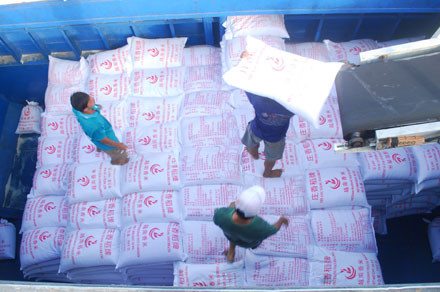
The inventory volume has reached nearly 1 million tons. Not only Vietnam, but Thailand also has millions of tons of rice in excess. The latter plans to sell eight million tons in stockpile. This means that Vietnam would have to compete with Thailand to sell rice. Nguyen Van Don, director of Viet Hung Company in Tien Giang said it is even more difficult to export rice in 2017 than the last year. The company still had not signed any export contract by the end of March. It now just gathers strength to deliver rice under contracts signed in 2016. “The market is unpredictable. However, it would be very difficult to find buyers this year. While the supply is profuse, Vietnam’s loyal markets such as the Philippines and Indonesia now can feed themselves, while other markets have tightened control over the import quality,” he said.
Not only Vietnam, but Thailand also has millions of tons of rice in excess. The latter plans to sell eight million tons in stockpile. This means that Vietnam would have to compete with Thailand to sell rice.
Le Thanh Khiem, deputy director of the Tien Giang Food Company, said there are latent difficulties in 2017 and upcoming years because of oversupply, while the market will be the buyers’ market. Meanwhile, an analyst said China would continue controlling the Vietnamese rice market this year. This means that any fluctuations of the Chinese market would affect the home market. Vietnam has been warned it would face even bigger difficulties as the Chinese market is no longer easy to please. The bad news has come that the President of the Philippines has announced the country has halted the import of rice to protect local production. VFA’s chair Huynh The Nang said not only the Philippines, but other SE Asian markets have gradually changed the rice import mechanism. It is not the governments, but private businesses which will come forward and import rice. Growing rice not a solution for Vietnam “Why does Vietnam still want to grow rice, if rice can’t sell well and the profit from rice is not high?” asked Vo Tong Xuan, an expert in agriculture. He believes that it would be better to reduce the cultivation of rice and shift to grow other crops which bring more money. Mentioning the 1 million tons in stockpile, Xuan said it is necessary to reconsider rice production scale in 2017. Vu Van Liet from the Vietnam Agriculture Academy said the state needs to help enterprises boost exports to African countries to clear the stocks, because the countries have the same requirements for rice quality as China.
Vietnam: Vietnam aims to earn global reputation for rice quality
- Thai News Service Rice has long been one of Vietnam’s most competitive agricultural products in the global market. But reform is urgently needed for sustainable rice production as the international integration process is posing numerous challenges to the sector. Vietnam considers rice a strategic and irreplaceable component of its farm production. The Government has included rice production in 2 of 3 major national economic programs and invested heavily in irrigation, seedlings, and intensive and extensive farming development. At a recent conference on sustainable rice production in the Mekong Delta, Prime Minister Nguyen Xuan Phuc said We will not only try to maintain our position as one of the world’s top rice exporters but also ensure that our rice has the best possible added values in the next one or two decades by meeting universal standards of nutrition and health. We must create breakthroughs in both policy and growth model to reform the rice sector. Vietnamese rice is now available in 150 countries with major markets including China, the Philippines, Malaysia, and Ivory Coast. Tran Tuan Anh, Minister of Industry and Trade emphasized that It’s time to concentrate on building a brand for Vietnamese rice in world markets. It’s essential to improve the quality of rice and strengthen coordination between farmers, processors, exporters, and logistics networks to form a production chain. Vietnam aims to build sustainable rice production zones and earn a global reputation for Vietnamese rice in terms of quality and food safety by 2030. – VOV
Vietnam’s rice exports continue to face challenges
-
HANOI, April 14 (Xinhua) — Vietnamese rice exports continued to face numerous challenges in the first quarter (Q1) of 2017 when the country has seen its rice exports sharply plunging since 2013, local media reported on Friday.
Official statistics showed that in the 2009-2013 period, Vietnam was among the world’s three biggest rice exporters. In 2012 in particular, Vietnam surpassed Thailand to become the world’s top rice exporter with over 7.7 million tons. However, since 2013, the country’s rice export volume has been on the downward trend, posting the seven-year low in 2016 with nearly 4.9 million tons of rice sold abroad. According to the Ministry of Agriculture and Rural Development (MARD), in Q1, Vietnam shipped around 1.28 million tons of rice to the world market, earning 566 million U.S. dollars, down 18.1 percent in volume and 17.3 percent in value year-on-year. The Q1 average rice export price hit 426 U.S. dollars per ton, down 1.6 percent year-on-year. The decline in Vietnam’s rice exports was blamed on the decrease in its key traditional markets, including China and the Philippines, reported local Vietnam Economic Times (VET) on Friday. Although China is seen as the “salvage” for Vietnam’s rice exports, and it continued to top Vietnam’s rice importers, Vietnam saw negative signals in rice exports to China in Q1 as China lifted its rice standards imported from ASEAN countries, including Vietnam. Accordingly, since Jan. 1, 2017, only 22 Vietnamese companies have been qualified to export rice to China. In addition, Thailand is discharging its rice inventory, which has lowered global rice prices, while the Philippines, one of the key markets of Vietnamese rice, recently announced that it would stop rice imports to protect the domestic production, said the Vietnam Food Association (VFA) on local CaFeF online newspaper on Friday. Addressing the possible inventory of Vietnamese rice amid the sluggish market situation and the current peak harvest time for Winter-Spring crops in the country’s southern Mekong Delta, VFA has urged local firms to develop the domestic market by building high-quality rice brands to meet with demands of domestic consumers as well as reduce the export pressure. To facilitate the rice branding, VFA proposed the Vietnamese government to reduce the value added tax imposed on local firms from five percent to zero percent in the next 5-7 years, reported VET.
Vietnam’s Q1 rice exports down but Chinese appetite set to grow
- ‘China has a major impact on Vietnam’s rice exports because when China starts making inquiries, prices rise and other buyers turn away from Vietnam.’ Vietnam’s first-quarter rice exports have fallen to a two-year low, but the outlook remains positive as shipments to China, its biggest buyer, are forecast to grow this year, traders and industry reports said. “The land border gates are now officially closed to Vietnamese rice, so export prices have dropped,” a trader at a foreign company in Ho Chi Minh City said, explaining that more fresh winter-spring grain arriving from the Mekong Delta has contributed to the lower prices. China has been the biggest consumer of Vietnamese rice since 2012, when it overtook Indonesia. Last year, Beijing and Hanoi signed an agreement to boost the rice trade via official channels. China has named 22 Vietnamese export firms that it deems qualified to deal with. He said the Chinese government prefers official trade as it cannot tax rice imported via land. China officially imports around 2 million tons of Vietnamese rice a year, while another 1-1.5 million tons enters China via land, and that volume is not included in Vietnam’s official statistics. This week, Vietnam’s 5-percent broken rice prices fell to $347-$350 a ton, free-on-board Saigon Port, from around $360 a ton in late February. At $347, the price is the lowest since February 16. Vietnamese rice is now cheaper than Thai rice of a similar grade, which stood this week at $374 a ton, according to the Thai Rice Exporters Association. Exports fall Shipments from Vietnam, the world’s third-biggest rice exporter after India and Thailand, in the January-March period dropped 24 percent from a year ago to an estimated 1.2 million tons, a two-year low, the government said on Wednesday. The estimate is the lowest since the first quarter of 2015, when Vietnam shipped 1.13 million tons. Overall weak demand is the reason for the drop, with potential buyers, including the Philippines and Mexico, still absent, traders said. Earlier this month, Mexico approved for 150,000 tons of rice to be imported at a zero percent tariff to meet domestic demand and diversify its supply sources. Traders said the demand would cut the market share currently held by the United States and open the door to Vietnamese rice. However, Mexico has yet to act on the decision. China imported 331,300 tons of Vietnamese rice from January-February, up 41 percent from a year ago, based on data from Vietnam’s agriculture ministry. In February alone, it bought 36 percent of Vietnam’s total rice exports, more than doubling the market share it held a year ago. China’s imports China’s rice imports in the 2016/2017 market year ending this June are forecast to rise 4 percent to 5 million tons, with Vietnam and Thailand remaining its key suppliers, the U.S. Department of Agriculture said in a report released on March 21. It said China’s rice imports would continue to be profitable if import prices stay below China’s floor price of $389 a ton, while the average CIF (cost-insurance-freight) rice price from Southeast Asia to China is $350/ton. “China has a major impact on Vietnam’s rice exports because when China starts making inquiries, prices rise and other buyers turn away from Vietnam, so overall the volume does not rise significantly,” a second trader said. He noted that more paddy is coming from the Mekong Delta, which supplies 90 percent of Vietnam’s rice exports. Mekong Delta farmers have finished harvesting around half of the 1.53 million hectares (3.78 million acres) planted for the crop, the Vietnam Food Association said. Output down Harvesting of the crop, the biggest among the delta’s three crops a year, ends in April. Paddy output is forecast to ease to 10 million tons, down 1.3 percent from last year, which is the third drop in a row, the agriculture ministry said, blaming unseasonal rain during the heading stage in November-December 2016. In the long term, Vietnam’s rice acreage and output will further fall as the country seeks to restructure its cash crops, officials said. On Wednesday, Prime Minister Nguyen Xuan Phuc suggested related agencies to switch from low-yield rice to medicinal plants if the latter has higher benefits, a government statement said, as part of efforts to boost Vietnam’s pharmaceutical sector. But the government also regards rice as essential to national food security, a status that gives rice businesses access to credit and adequate support. Phuc told a conference on March 15 to look for solutions for sustainable production in the Mekong Delta. The premier has urged the trade ministry to strip the food association’s right to set floor prices and to allocate shipments to key markets, factors that exporters said have been hindering overseas sales. The association has projected Vietnam’s rice exports this year will reach around 5 million tons. Shipments fell to 4.8 million tons in 2016, the lowest since 2008, due in part to thinner demand and growing regional competition. Source: VNExpress
Vietnam vows to develop national rice brand
-
Vietnam vows to develop national rice brand
VietNamNet Bridge – The government has approved a plan to develop a national rice brand by 2020, aiming to improve marketing capability and competitiveness.
Vietnam is a big rice exporter, but the world only knows Its white rice products with different broken grain proportions. Vietnam’s rice exports do not bear a Vietnam brand, but they are put in bags with import countries’ labels. In the domestic market, Vietnam’s rice is less favored than imports from Thailand, Cambodia, Taiwan and Japan. Vietnam exports rice to 80 countries and territories, but it has to compete fiercely with Thailand, India and Pakistan in the markets, and with Myanmar and Cambodia in the future. A report of the General Statistics Office (GSO) shows that Vietnam’s key export market is China, but the market is always unstable and unpredictable. While Vietnam mostly exports rice to China across the border gate, Thailand, Myanmar and Cambodia have signed G2G (government to government) export contracts with the country. Meanwhile, Asian markets (the Philippines, Indonesia and Malaysia) have had big changes recently as the governments have set up a program to develop rice production in the countries to restrict imports.
In African markets, the biggest rice importers, Vietnam has to compete fiercely with India and Pakistan to sell 25 percent broken rice, and with China to sell 5 percent broken rice.
In African markets, the biggest rice importers, Vietnam has to compete fiercely with India and Pakistan to sell 25 percent broken rice, and with China to sell 5 percent broken rice. In April 2014, Vietnam’s 15 percent broken rice was $436.5 per ton, which was far below the price levels offered by three other contractors from France, Hong Kong and Thailand. And these are reasons why the national program on developing Vietnam’s rice brand by 2020 has been launched. Vietnam wants to build up a national rice brand in order to help Vietnam’s rice sell at higher prices and cement Vietnam’s firm position in the world’s rice market. Analysts pointed out that the program on developing rice brand has just been approved, the coordination mechanism remains unclear. Also, Vietnam still doesn’t have high-quality rice varieties in large scale and sustainable production environment. There is no close cooperation among businesses, farmers and researchers, and farmers and exporters lack information about key markets. In addition, Vietnam lacks attractive brandnames to advertise in domestic and foreign markets. Dan Viet quoted some experts as reporting that Vietnam’s rice has low and unstable quality because many rice varieties are used in production, while there is no material growing area large enough. In Mekong Delta alone, there are 100 rice varieties in use. “It is impossible to control rice brand with too many varieties,” an expert said, adding that Thai national brand is applied only to two varieties KDML 105 and RD 15.
Thai rice worries Vietnamese exporters
-
Thai rice worries Vietnamese exporters
Thailand’s plan to sell all its rice reserves of about eight million tonnes this year has sparked concerns that this move will undermine Viet Nam’s rice exports.
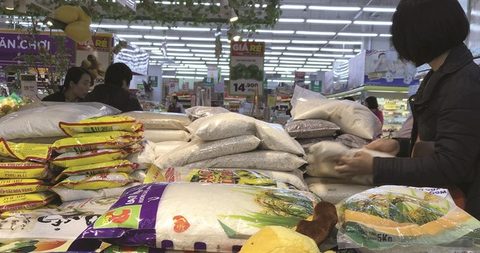 Customers buy rice at the Big C supermarket, Long Bien district, Ha Noi. Vietnamese rice businesses are now focusing on the domestic market instead of exports. Nguyen Van Don, director of Tien Giang-based Viet Hung Co Ltd, said rice exports were positive last month, with many contracts signed. But starting early last week, trading tended to slow, he said, adding that his company has not had any new export contracts. He attributed this to the higher prices of Vietnamese rice compared to last month, and to Thailand’s plan to sell all of its rice stockpiles. Dang Thi Lien, director of Long An Foodstuff Co Ltd, said the price of Vietnamese five per cent and 15 per cent broken rice was US$5-10 a tonne higher than the same kinds of Thai rice. To compete with Thai rice, Vietnamese traders should lower their export price, but domestic rice prices are on the rise, even higher than export prices, making it hard for traders to compete abroad, she said. Huynh The Nang, chairman of Viet Nam Food Association, said “It will be hard to compete with Thailand in exporting white rice due to our less competitive prices.” Vietnamese firms previously exported a lot of white rice to Africa, but now firms are only exporting fragrant rice to the market, he said. “Thailand’s determination to sell all of the rice in stockpiles in the first half of the year will continue to adversely affect Viet Nam’s rice exports. Viet Nam’s export rice prices are predicted to drop further this year. Only when Thailand’s rice stockpiles are sold out can the rice export market recover,” he said. Domestic market Viet Nam produces about 44-45 million tonnes of paddy a year, equivalent to 22-22.5 million tonnes of rice. Domestic consumption accounts for about 15-16 million tonnes a year, and the rest is for export. Despite being one of the world’s largest rice exporters, Viet Nam’s high-grade rice segment is dominated by foreign brands. Nang, who is also general director of the Viet Nam Southern Food Corporation (Vinafood 2), said many domestic rice enterprises have implemented strategies to promote their rice brands as well as boost consumption of their products in the home market. Enterprises have established their own farm and production facilities and are focusing on improving the quality of their rice to international standards as well as building brands for their products. Last December, Tien Giang Food Company introduced to the market four to five new rice brands, which are produced following hygiene and food safety standards and are able to enter the US market. In the case of Song Hau Food Company, a member of Vinafood 2, thanks to actively promoting its rice brands and expanding its distribution system, the company last year doubled its domestic sales revenue from 2015, he said. Other companies, such as Dong Thap Food Company and HCM City Food Joint Stock Company, have actively improved their distribution systems, he said. Consumption volume of Vietnamese rice in the domestic market is expected to increase significantly in the coming time, especially as more and more rice is produced following hygiene and food safety standards. In addition, programmes to enable consumers to trace the origin of rice will be sped up this year, he said. Pham Minh Thien, director of Dong Thap-based Co May Private Enterprise, said: “We have a market of more than 90 million people. This is a very good foundation for us to deal with the supply and demand dynamic of the rice market.”